AgentLoom · v0.1.0
Many models. One workbench.
Run Claude, Codex, DeepSeek, GLM and more — side by side, or as a team. The open-source desktop workbench that turns many LLMs into one workforce you control.
Run Claude, Codex, DeepSeek, GLM and more — side by side, or as a team. The open-source desktop workbench that turns many LLMs into one workforce you control.
Most AI coding tools hand you one agent, in one editor, on one folder, from one vendor. That's fine — until the job is bigger than one agent, the quota runs out mid-afternoon, or you need to know exactly what it changed before you keep it.
AgentLoom starts from the opposite assumption: many projects, many models, several agents working at once — on your machine, under your control.
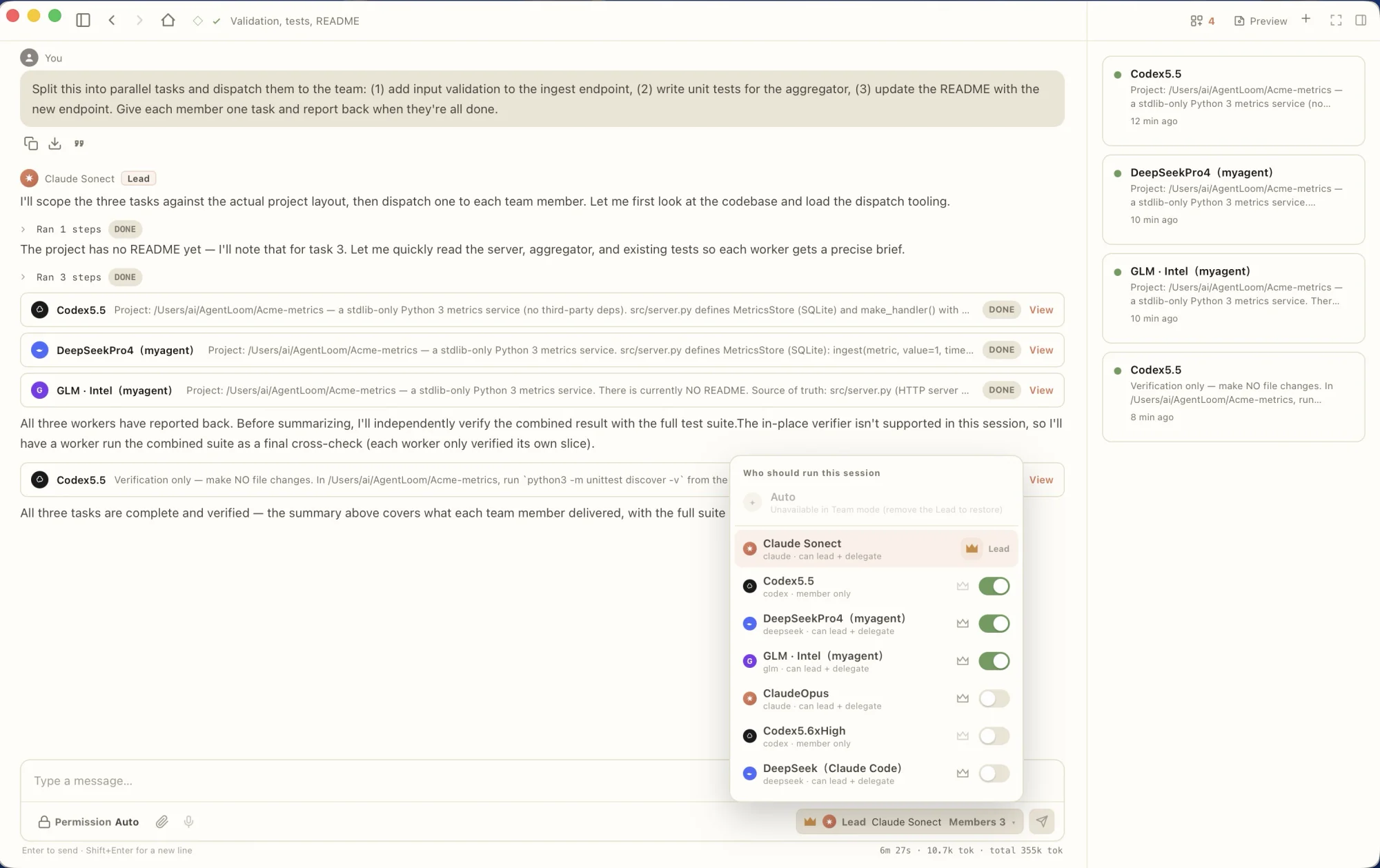
Crown a lead — Claude or Codex, the models that are good at planning — and give it a bench of cheaper models. The lead splits the goal, hands out tasks in parallel, reviews what comes back and fixes what doesn't fit. Several files move at once instead of one, and you pay top-tier prices only for the thinking.
Out of Claude quota at 4pm? Point the same session at GLM, DeepSeek or a local model and keep going — same thread, same context, nothing to copy-paste. Switching vendors is a dropdown, not a migration. And when a session gets long, AgentLoom writes the hand-off brief so the next one starts warm.
AgentLoom ships its own agent engine, myagent, written in Rust — no Claude Code, no Codex, no vendor CLI required. It gives any provider the same tool loop, plan mode and checkpoints that the expensive CLIs have, so a pay-as-you-go key gets a real shot at real work.
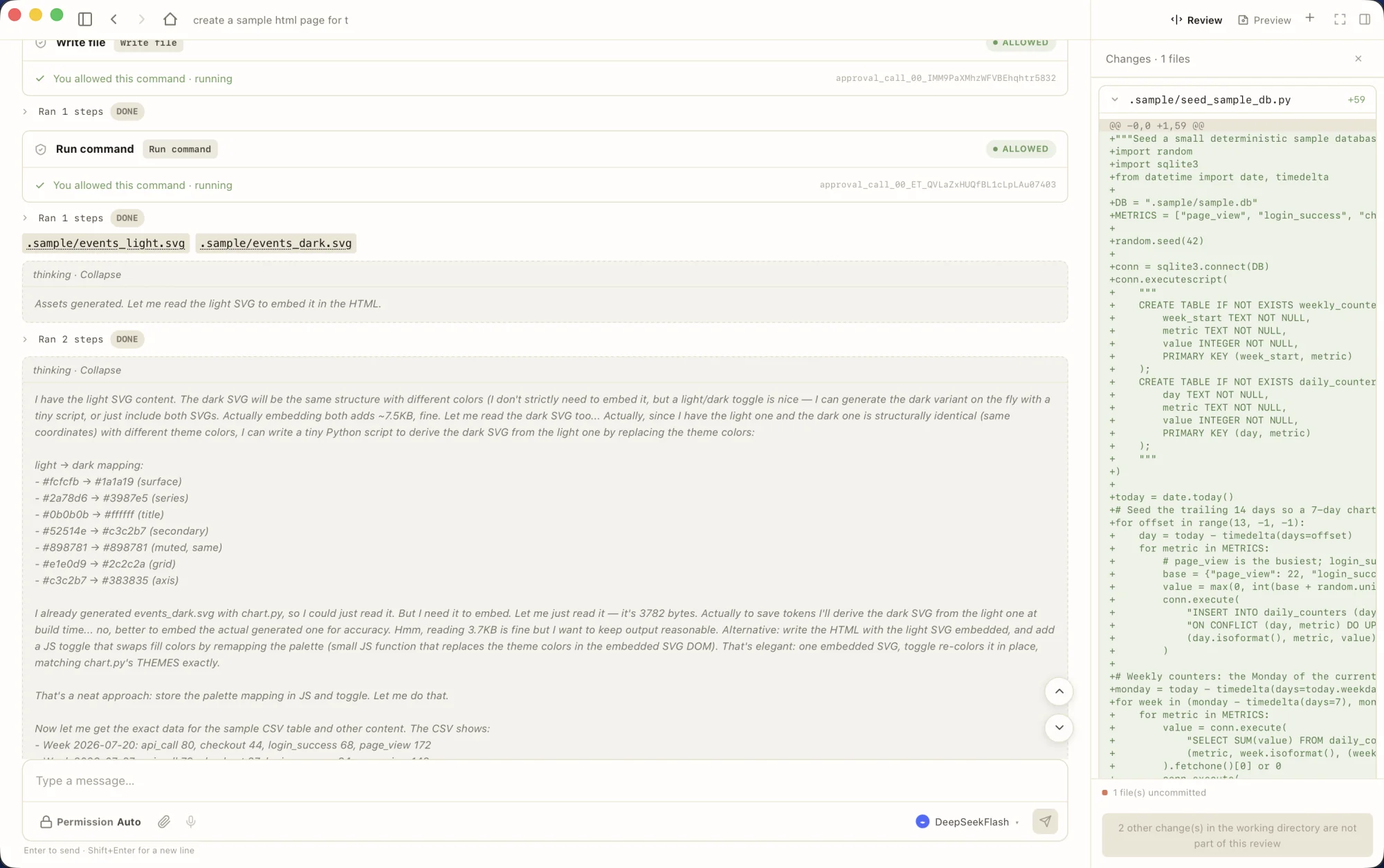
Every command and every file write lands as a card you can open, plus a Review panel with a file-level ledger. Keep what you like, roll back the rest, file by file. You don't have to be a terminal expert to tell whether the agent did the right thing — and you don't have to trust it blind to let it work.
Open source and local-first. Your API keys live in your OS keychain, your conversations in a database on your own disk, and agents work directly in your own repositories. AgentLoom runs no server on the internet; the only listeners it starts are loopback-only helpers — the only thing that ever leaves your machine is the request you send to the model provider you chose. Its own bookkeeping never touches your working tree.
On a 30-instance subset of SWE-bench Verified, graded by the official Docker harness with no test leakage, myagent driving deepseek-v4-pro resolved a median of 17/30 (56.7%) across eight runs, ranging 16–19. That's a hand-picked subset, not the full 500 — the full method and the exact instance IDs are in the repo.
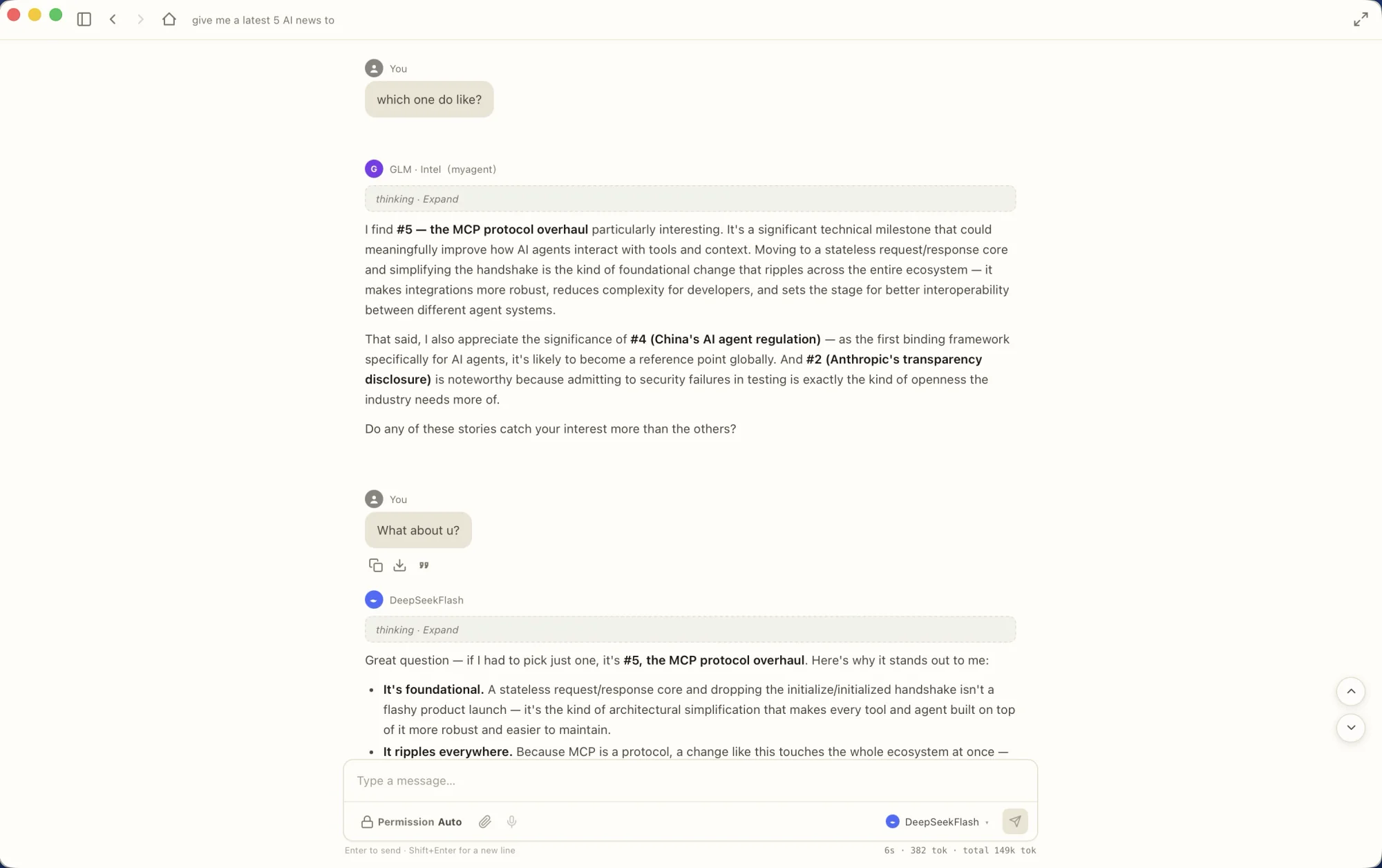
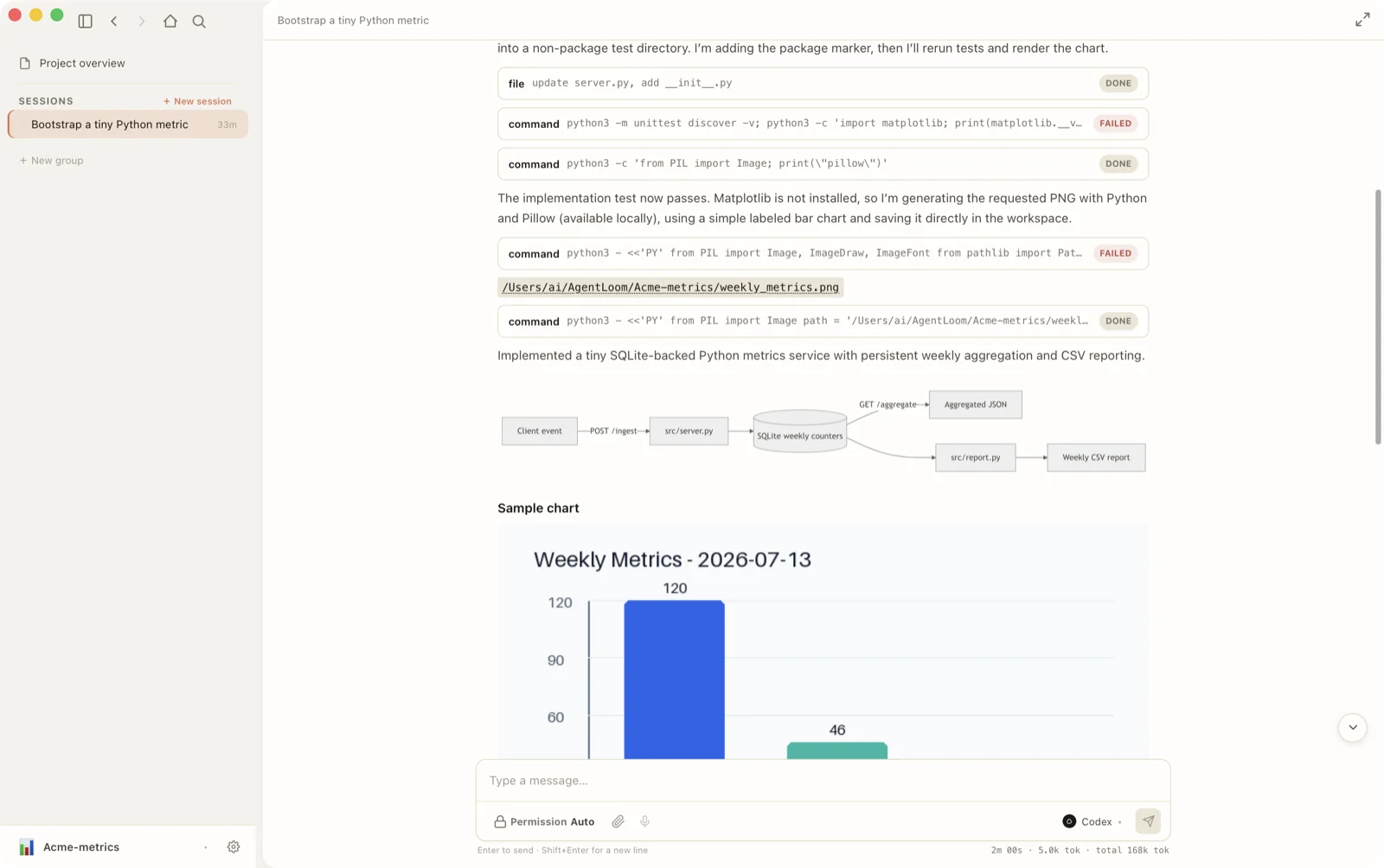
A session is the unit of work: one focused conversation that ships code, with checkpoints and undo. The sidebar holds every project you work on and every session inside it — no tab soup.
Configure any number of agents across providers; crown a lead, toggle members, dispatch work, watch results land.
All your projects in one window — GitHub repos and plain local folders alike — each with its own session list, groups and ⌘K search.
A file-level write ledger with reviewable, selective undo. See exactly what an agent touched before you decide to keep it.
Mermaid diagrams, inline images, diffs, collapsible thinking, tool-call cards; long output folds by default.
myagent, a Rust harness with tool use, plan mode, checkpoints and event streaming. Use it standalone on the command line, or let AgentLoom drive it.
DuckDuckGo with zero config, Brave or Exa with your key — so any agent can look things up.
OpenAI- and Anthropic-compatible endpoints, custom base URLs, local models. Choose your search backend, shape your agent roster, rename the roles, rearrange the panels.
English and 简体中文 in the UI today, more on the way.
macOS (Apple silicon & Intel); a Windows build exists but is still experimental.
Download the .dmg and drag it to Applications. Notarized — no warnings.
Download the installer .exe. The Windows build has not yet been verified on real hardware — expect rough edges, and please report what you hit.
Use it freely, self-host it, fork it — but if you distribute a modified version or run one as a service, your changes have to be open too. That keeps the workbench honest for everyone.
The AgentLoom and MyAgentHubs names and logos are trademarks of MyAgentHubs and are not covered by the code license.